The key
An octabox at forty-five degrees, slightly above the eye line. It decides where the shadows fall, which is to say it decides the whole picture.
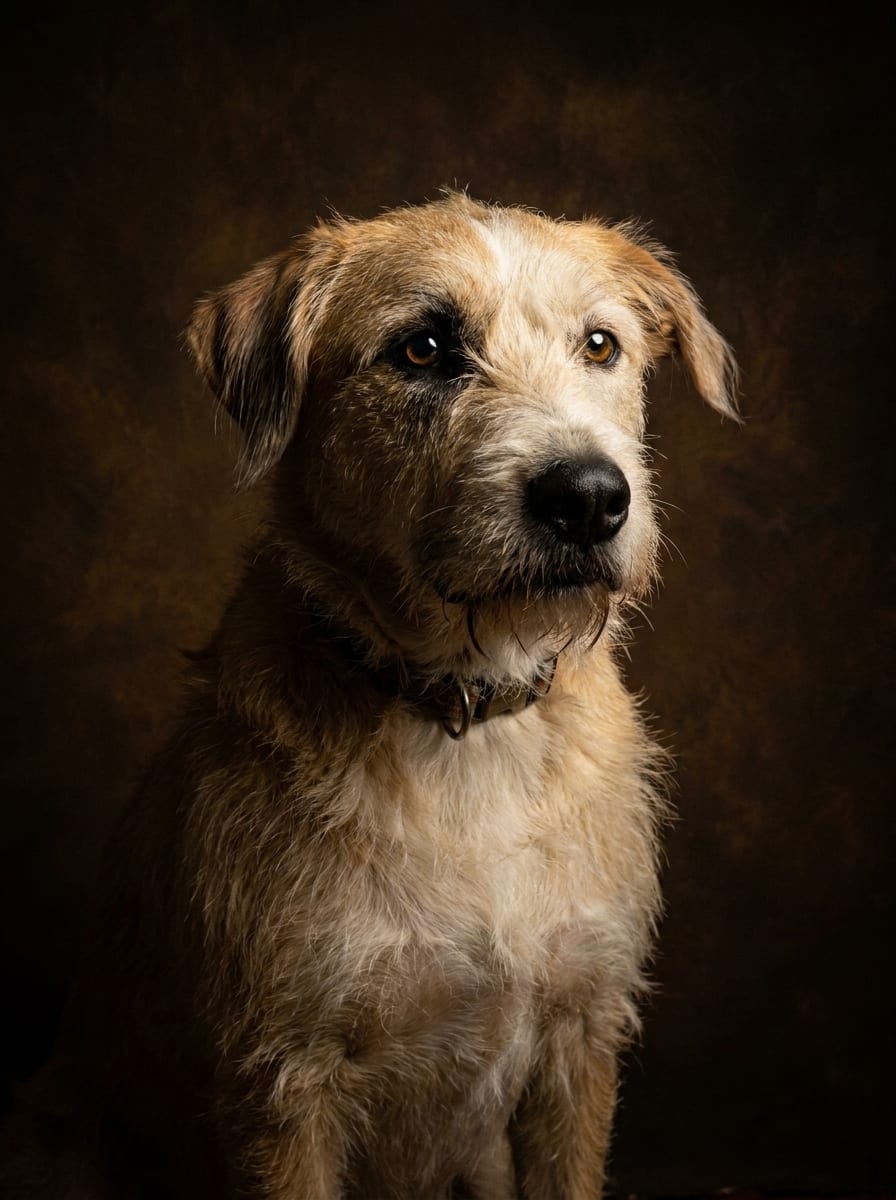
What makes a studio portrait is not the room. It is the light: a key at forty-five degrees, a fill opening the shadows, a rim separating the coat from the background. All of that can be rebuilt on a photo you already have.
A real printed picture — seven lighting setups, 88 sizes.
Image generated with artificial intelligence.
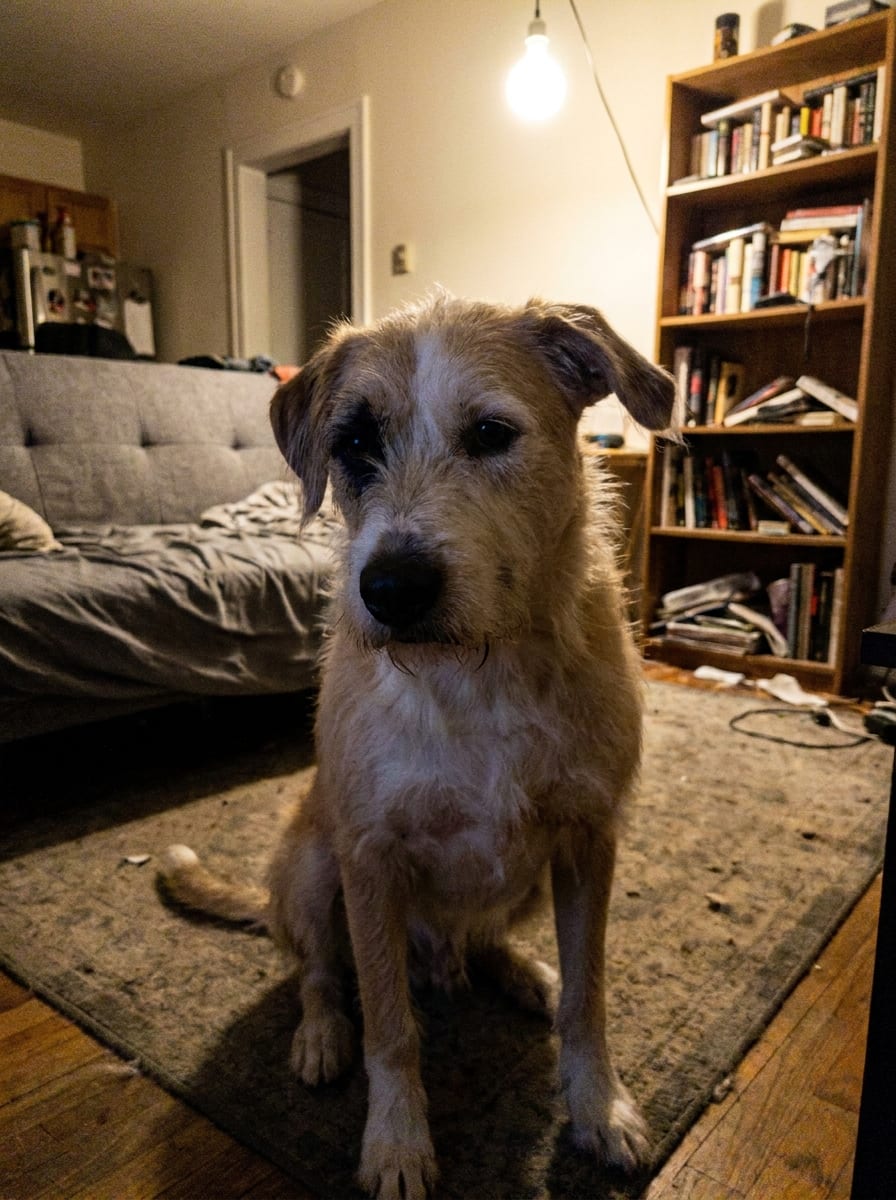
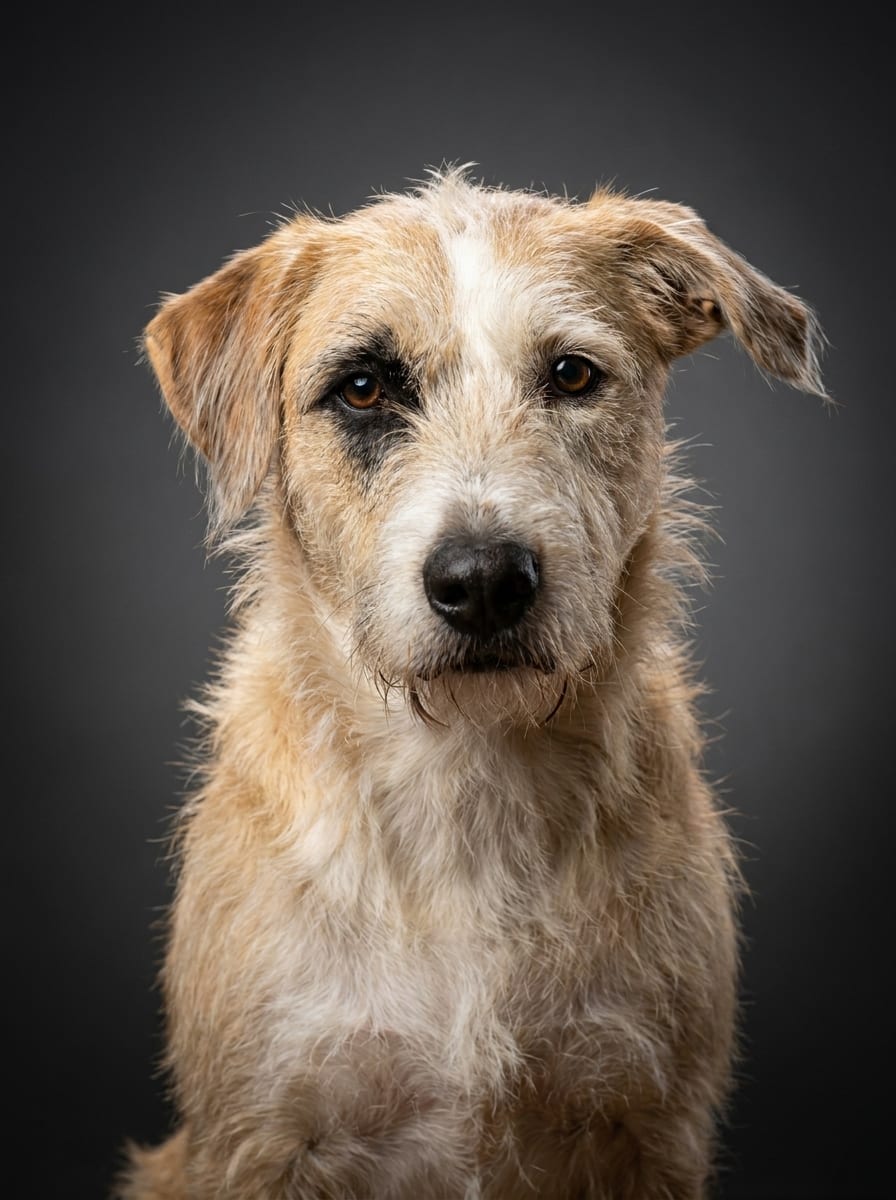
A ceiling bulb sits straight above the head: it fills the eye sockets with shadow, flattens the muzzle and hands you a background full of radiator. Move the light to forty-five degrees and the face gets its planes back — a catchlight in the eye, texture in the coat, an outline that reads from the other side of the room.
An octabox at forty-five degrees, slightly above the eye line. It decides where the shadows fall, which is to say it decides the whole picture.
A reflector on the shadow side, opening it just enough to keep detail. Too much and the face goes flat again.
A light behind and to the side, drawing a thin edge along the coat so a black dog stops merging into a dark background.
That is the rig a pet photographer builds before your animal walks in. Here it is reconstructed on the photo you send, which is why there is nowhere to drive to.
Octabox close in, charcoal background. Kind light, no hard shadows. The default choice.
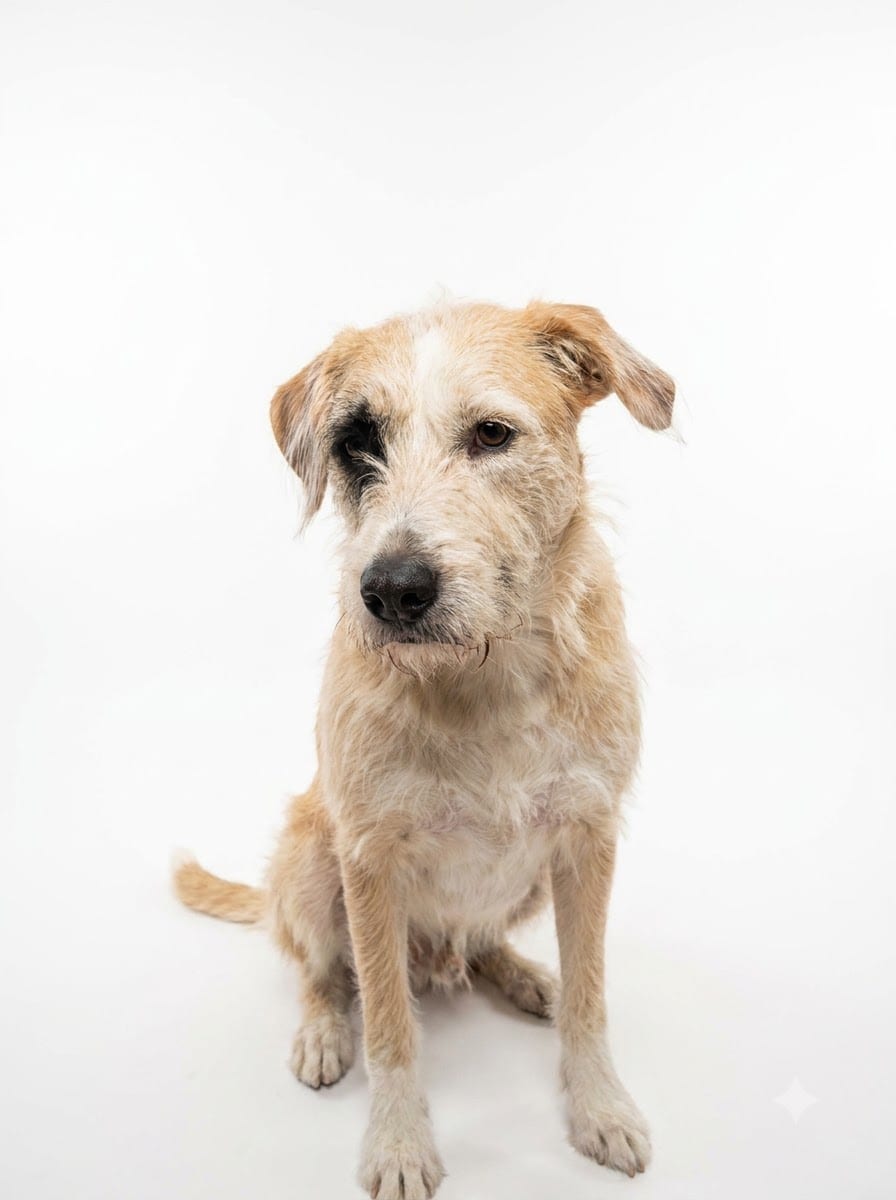
Light background, broad fill. The one that rescues black coats and heavy fur.
Key pushed round until half the face falls into shadow. Serious, closer to an oil portrait.
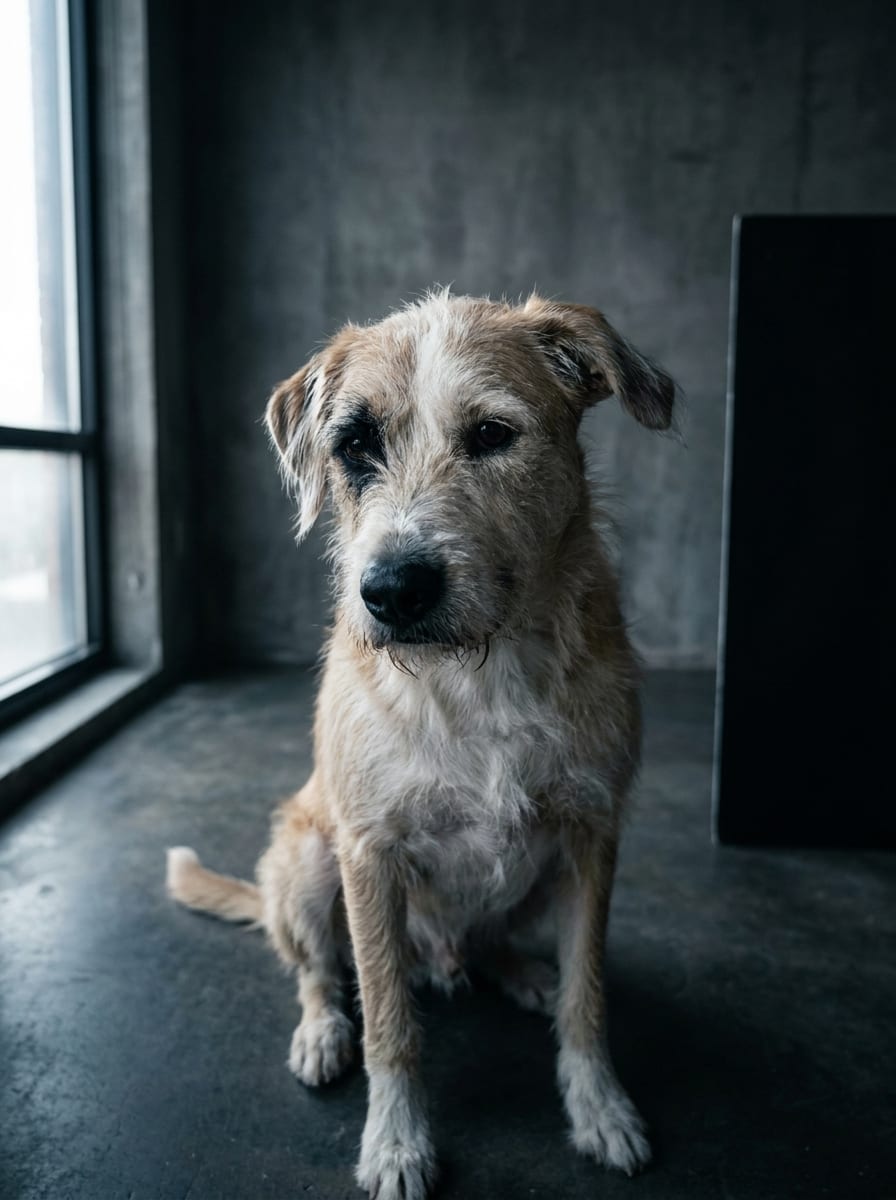
Cool light from one side, soft falloff. Reads as home rather than studio.
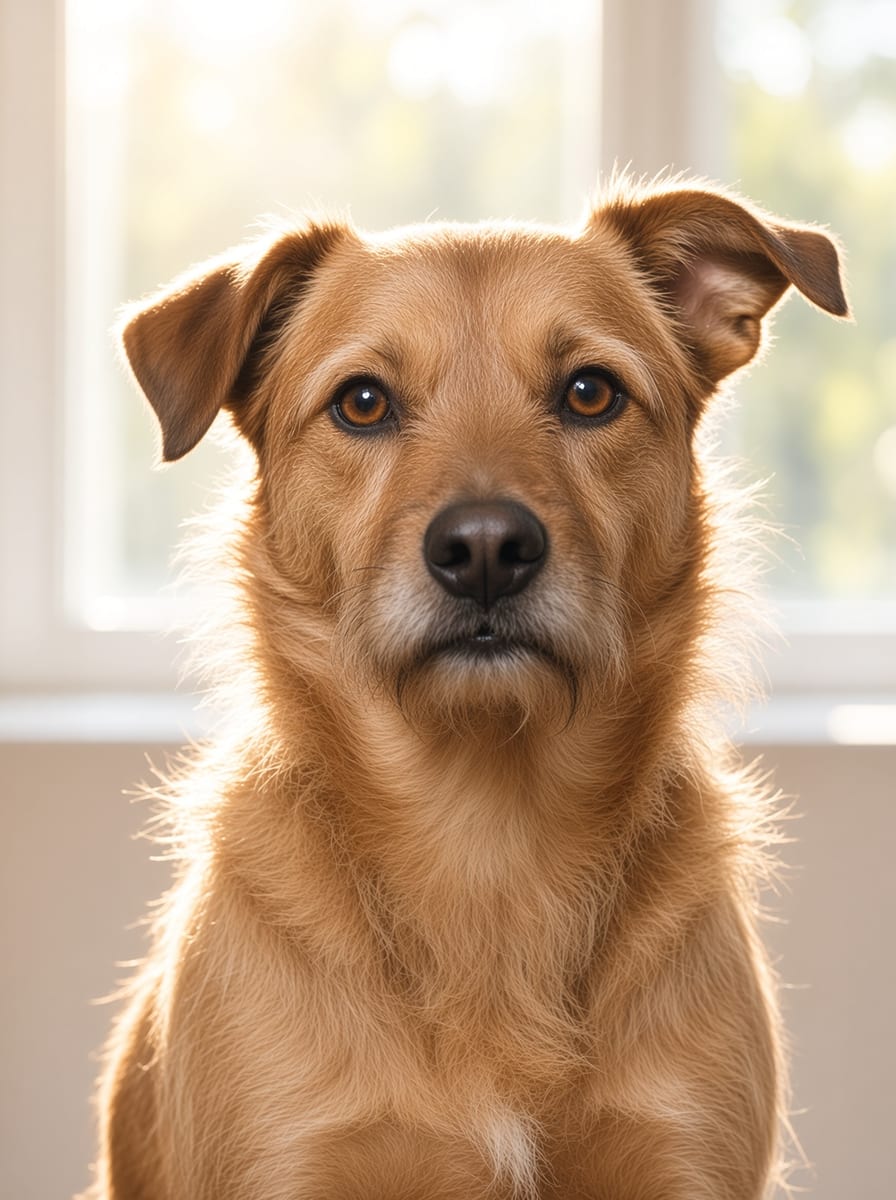
The light behind: every hair drawn against it.
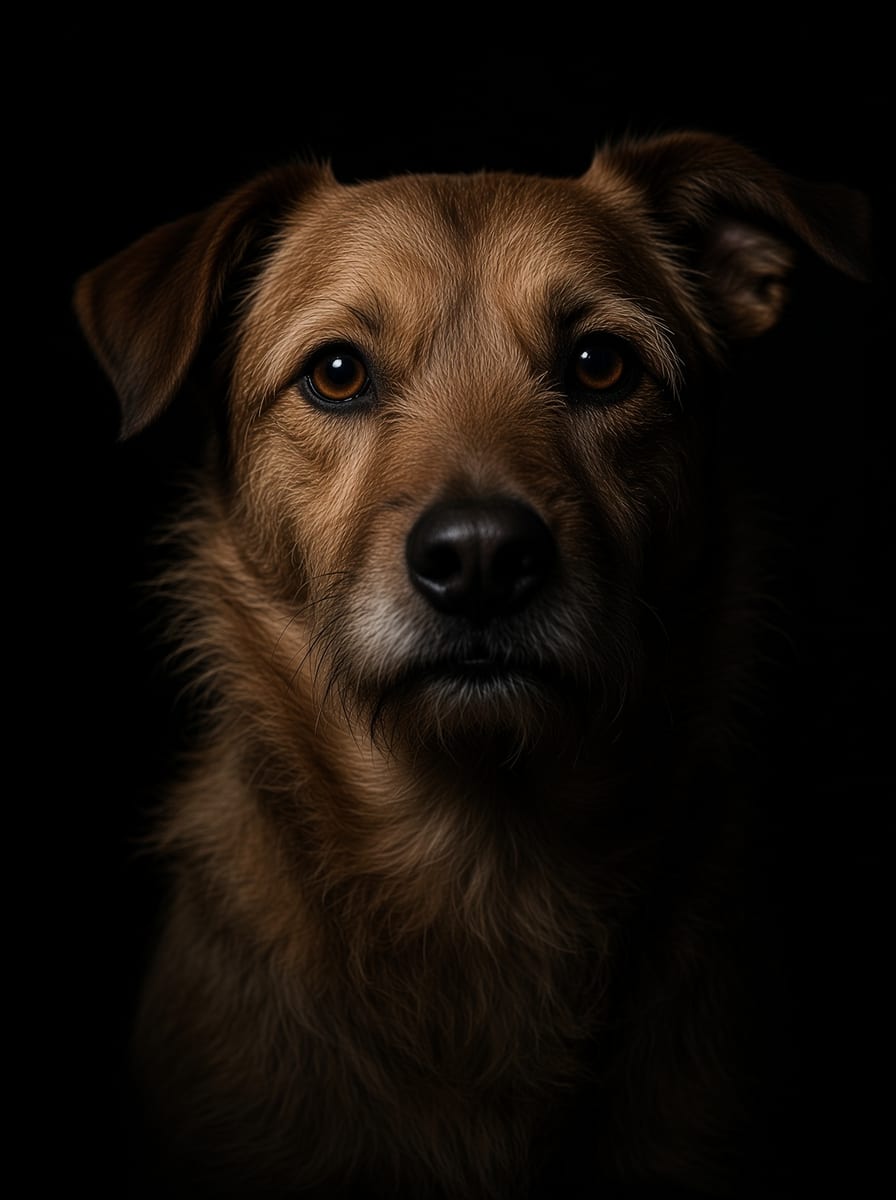
Almost all black, only the eyes. The most dramatic.
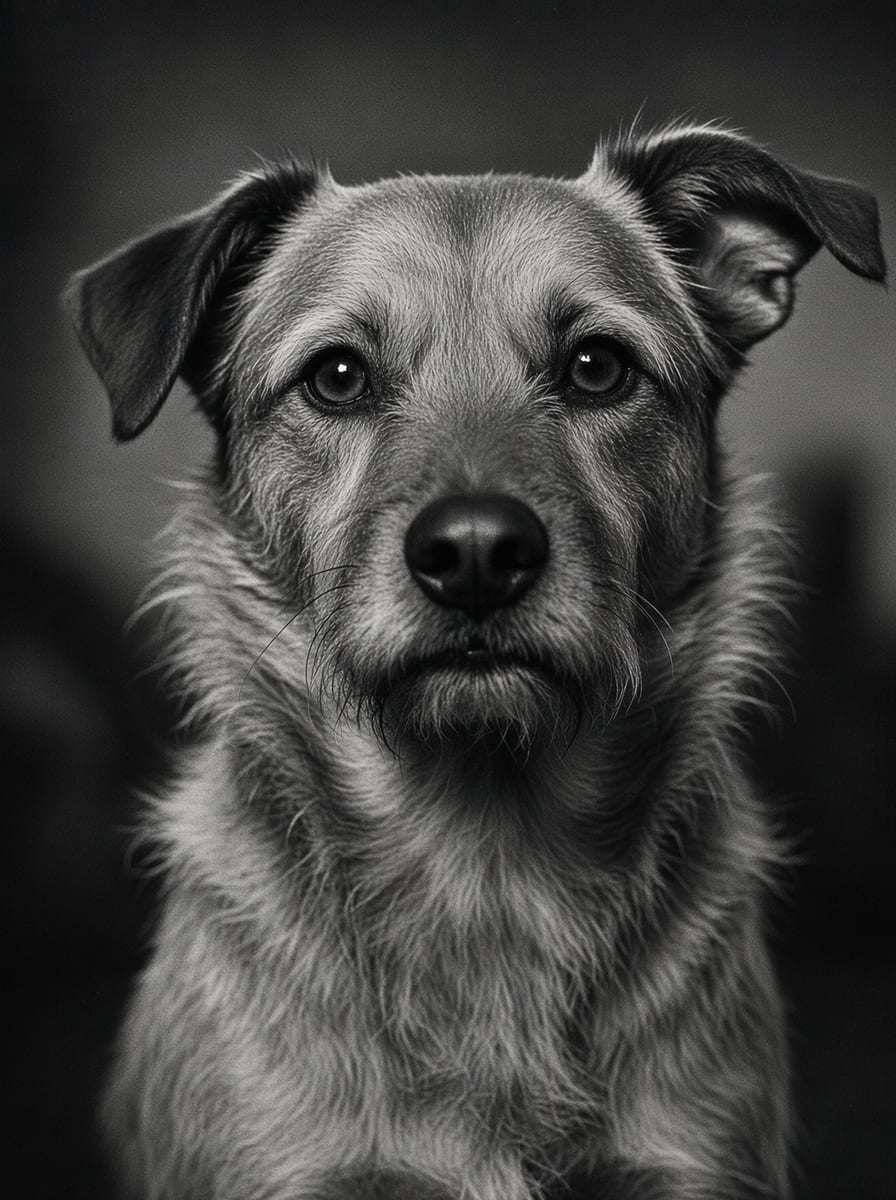
Film grain, no colour. Never goes out of fashion.
Images generated with artificial intelligence.
Small asymmetries — a torn ear, a notch, one eye a different color — are what it is most likely to tidy up without being asked. That is the thing to check in the free preview before you order anything.
Matte or premium lustre. Sizes and prices.
Stretched, no glass. Sizes and prices.
Wood frame and hook. Framed canvas from €89.95.
A portrait made under controlled light instead of whatever light happens to be in the room: a key light shaping the face, a fill reflector opening the shadows, a rim light lifting the outline off a plain background. The background is neutral so nothing competes with the animal.
No. There is no studio, no photographer and no session. The studio lighting is reconstructed by an artificial intelligence from the photo you upload, and we declare that here, on the result screen and inside the metadata of the file we print, under article 50 of the European AI Act.
A ceiling bulb sits above the head, so it fills the eye sockets with shadow and flattens the muzzle. A key light at forty-five degrees does the opposite: it separates the planes of the face, puts a catchlight in the eye and lets the coat show its texture.
Warm for most animals. Clean for very dark coats, because a light background keeps the outline from disappearing. Rembrandt when you want the face serious rather than friendly. Window when you want it to look like an afternoon at home rather than a studio.
Yes. The whole point of a studio background is that it holds nothing: no sofa, no radiator, no television. That is what makes the picture readable from across the room.
A printed picture. Matte and premium lustre paper from 29.95 euros, canvas from 54.95 euros, framed from 64.95 euros and framed canvas from 89.95 euros, in 88 sizes from 13x18 cm to 51x152 cm. Shipping included to 169 countries; 4 to 6 working days in the United States.
No carrier, no car, no appointment. One phone photo of your cat.
The session your dog would never sit still for.
Dogs, cats, horses and rabbits, from a photo you already have.
What separates a phone snap from a portrait you would hang.
Why there is no studio to visit, and why that is the point.
Which size for which wall, with the real measurements.