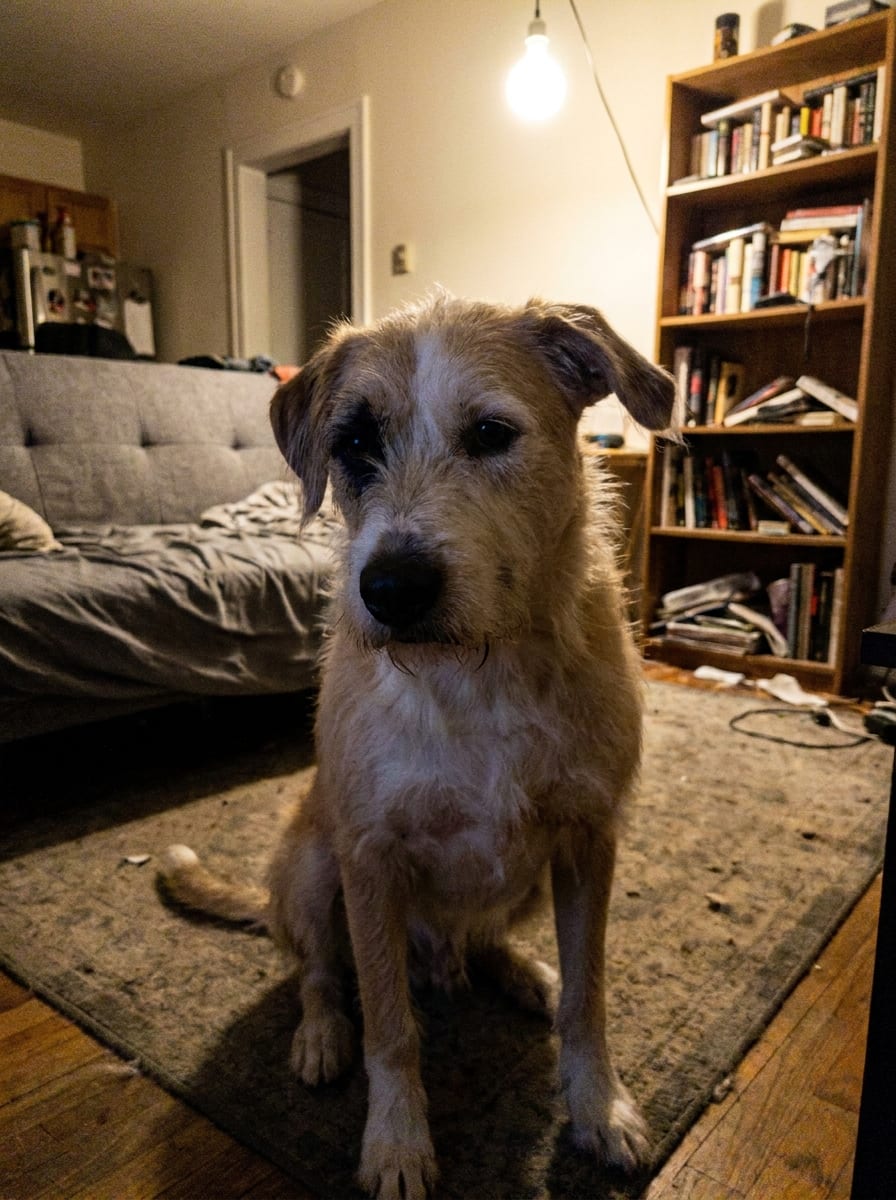
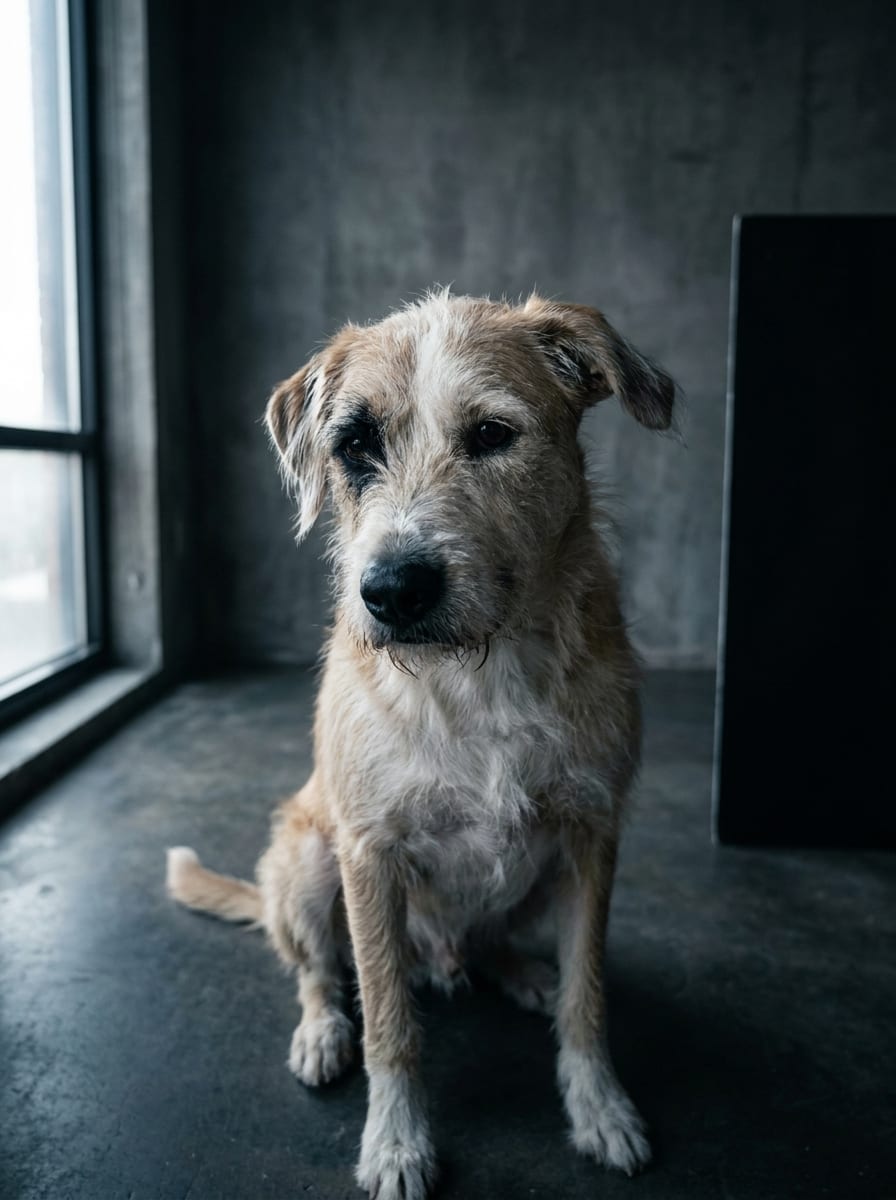
Cotton paper, no frame. Frame it yourself or clip it to the wall.
Most of us have hundreds of photos of an animal who is gone and not one that can go on a wall. This turns one of them into a studio portrait, printed on canvas and sent to your home.
Image generated with AI
The portrait is generated by an artificial intelligence model from the photograph you upload. It is not a photograph taken of your pet, and it is not painted by anyone. The face comes from your photo; the light, the backdrop and the framing are constructed.
We put that first, before any price, because a memorial is the worst possible place for a euphemism. If what you want is a real photograph enlarged, a local print shop can do that and will do it well. If what you want is that same face with the light it never got, this is what this is.
There is also no rush here. The photo you have will still be there next month. Nothing on this page expires.
The gray around the muzzle stays. So does the scar, the ear that folded the wrong way, the eye that had gone cloudy. Those are the parts that make it them, and a portrait that tidies them away is a portrait of a different animal.
What changes is the light and the background: the television, the kitchen floor and the ceiling bulb come out; a studio backdrop and one soft directional source come in.
Older photos are often the only ones that exist, and phone cameras from ten years ago were not kind. A few practical notes, from what does and does not survive the process:
If you are weighing up two or three candidates, this piece on what makes a photo good enough for canvas goes through resolution, cropping and the cases that do not work.
Canvas has no glass, so it does not reflect a window or a lamp back at you, and it does not need a frame to look finished. It is also matte, which suits a portrait that will be looked at from close up. A framed print is the more formal object, and a framed canvas sits between the two.
Sizes run from small enough for a shelf to large enough to be the only thing on a wall. Both are reasonable choices; there is no correct one.
Prices are in euros, per piece, and the format is chosen after you have seen the portrait. Shipping goes to 169 countries and prints at the workshop nearest the delivery address; most US addresses receive it in 4 to 6 days.
Cotton paper, no frame. Frame it yourself or clip it to the wall.
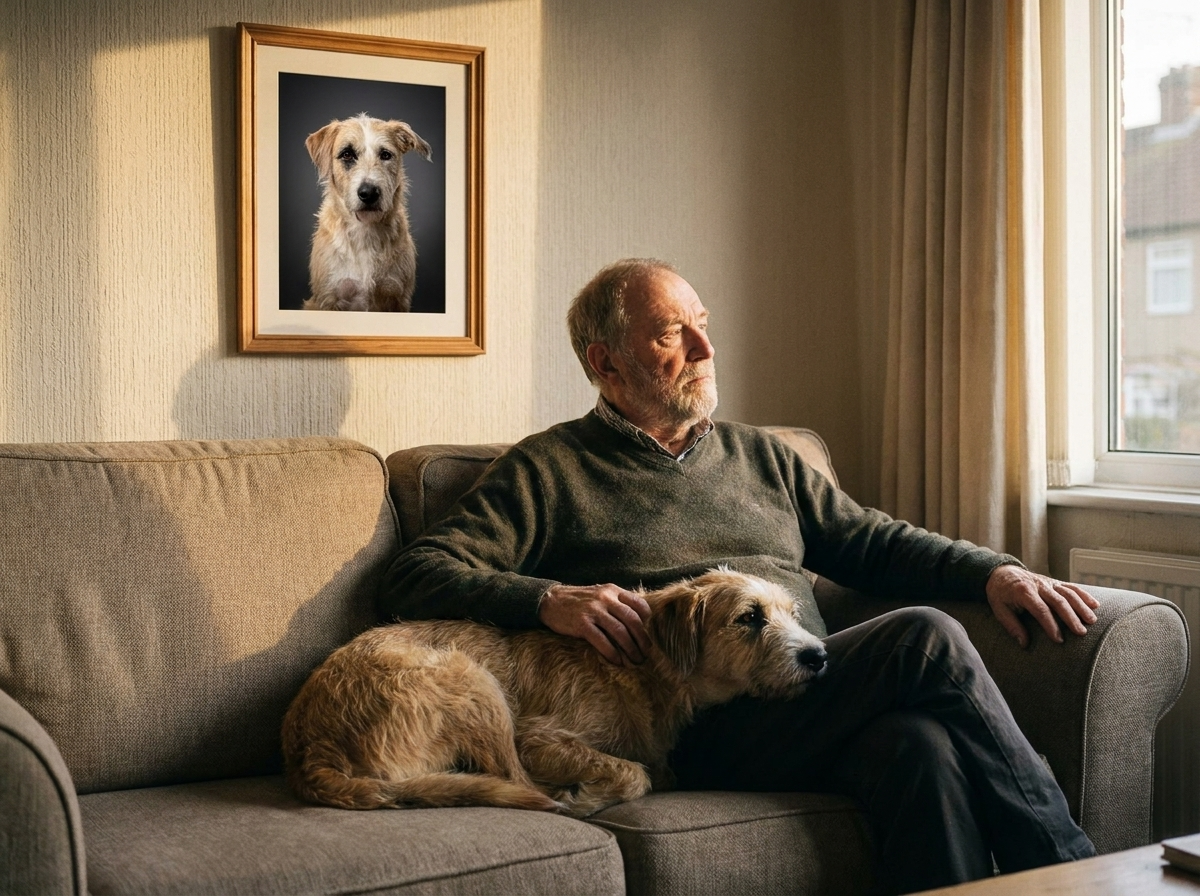
Stretched over a wooden bar. Hangs as it comes, no glass in the way.
Wooden frame and mat board. Arrives ready to hang, hanger fitted.
Canvas in a floater frame. The heaviest of the four, and the one that reads as a piece.
Sometimes, and it is better to know before you order. The face needs to be recognizable in the original — if the eyes are a smudge, the portrait will not bring them back. You can upload the photo and look at the result at no cost, which is the only reliable way to find out.
No. It is an image generated by an AI model from the photograph you upload. The face is theirs, taken from your photo; the light and the background are not real. We say this plainly because a memorial is exactly the wrong place to be vague about it.
Yes. If both of you are in frame, both of you stay in the portrait.
Canvas at €54.95 and framed canvas at €89.95 are the common ones, mostly because canvas has no glass and no reflection. A framed print at €64.95 is the more formal option.
None. The photo will still be there in six months, and so will we.
You can upload the photo, look at the result, and close the page without buying anything. That is a normal way to use this, and it costs nothing.